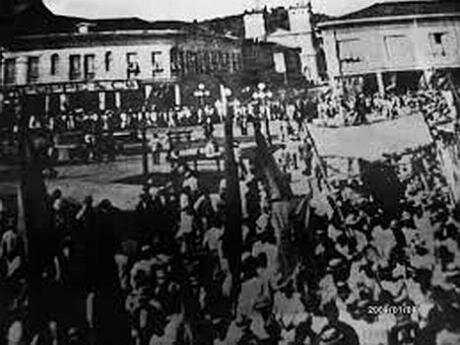
On this day in 1922, soldiers fired on a crowd of 20,000 demonstrators, killing approximately 300 people who were participating in a general strike in Guayaquil, Ecuador.
The general strike took place in the context of an economic crisis related to the collapse of cocoa bean prices. Trolley and public utility workers initiated the labor action, inspired by a successful railroad workers' strike in nearby Durán. Their demands were initially modest (safer working conditions, more timely pay), but grew more ambitious as the strike war on (the creation of an artificial exchange rate to manage severe currency inflation).
The strike became city-wide on November 13th, and the Ecuadorian government called on the military to suppress it. On November 15th, 1922, more than 20,000 demonstrators gathered in downtown Guayaquil and marched towards the police station. When they arrived, they were fired upon by soldiers at the station. Approximately three hundred protesters died, either by gunshot or from being stabbed by bayonets.
For most workers, this incident was the end of the strike, however many of their demands, including an exchange rate moratorium and wage increases for trolley workers, were conceded.